It is now undeniably autumn. My summer swimming season has come to an end, and the trees here in southeastern New England are beginning to turn. Here is what has happened since my last missive.
My September column for Skeptical Inquirer covered recent, somewhat disturbing research showing that readers actually prefer fiction and poetry written by AI chatbots over works written by human beings—even by some of the best writers in the English language. If readers are told a work is written by AI, they report liking it less than works they are told are written by a chatbot. But it appears that, among other things, the robots have learned how to enchant us with their words.
Dr. Willoughby Britton
My October column, “Is Meditating Bad for You?” covers research showing some potential downsides of meditation. I was surprised to learn that, according to the available evidence, one in ten people who have tried meditation at some point in their life has had an unwanted experience that affected their daily functioning. As part of the column, I interviewed Dr. Willoughby Britton, who has done much of the research on the harmful effects of meditating and operates Cheetah House, a non-profit organization offering consultation and support for those suffering from the ill effects of meditation.
A note for locals. I will be giving a talk at the Norwich (CT) Arts Center, “The Wild World of 19th Century Spiritualism,” on Saturday, November 7 at 7:30 pm. You can find details here. Norwich was the home of Daniel Dunglas Home, who was a physical medium who claimed to be able to levitate, among other things. I will be appearing with researcher Doug Harlow in what should be a fun program.
Finally, I managed to get away for a brief vacation in Dublin—my first trip to the land of Yeats, Shaw, Wilde, and Heaney. Because I visited during the Dublin Theatre Festival, I saw seven plays in six days and visited several museums. I will leave you with a selfie of me in St Stephen’s Green near Trinity College next to a bust of one of my literary heroes.
Hello from the height of the summer season in New England. I have just two quick items.
The September/October issue of Skeptical Inquirer magazine is about to hit mailboxes and newsstands, and, for the first time, I wrote the cover story, “The Telepathy Tapes: A Portal Into a World of Woo.” I report on the second season of the insanely popular podcast. In this series of the podcast, the guardrails come off, and a cornucopia of crazy paranormal ideas is endorsed. Skeptical Inquirer deputy editor Ben Radford made a cool video to introduce the issue, which you can find below.
Back in June, I gave a talk entitled “Welcome to the Burned-over District!” at the CSICon 2026 conference in Buffalo, New York. A well-produced video of that talk is now available on YouTube at this link and below.
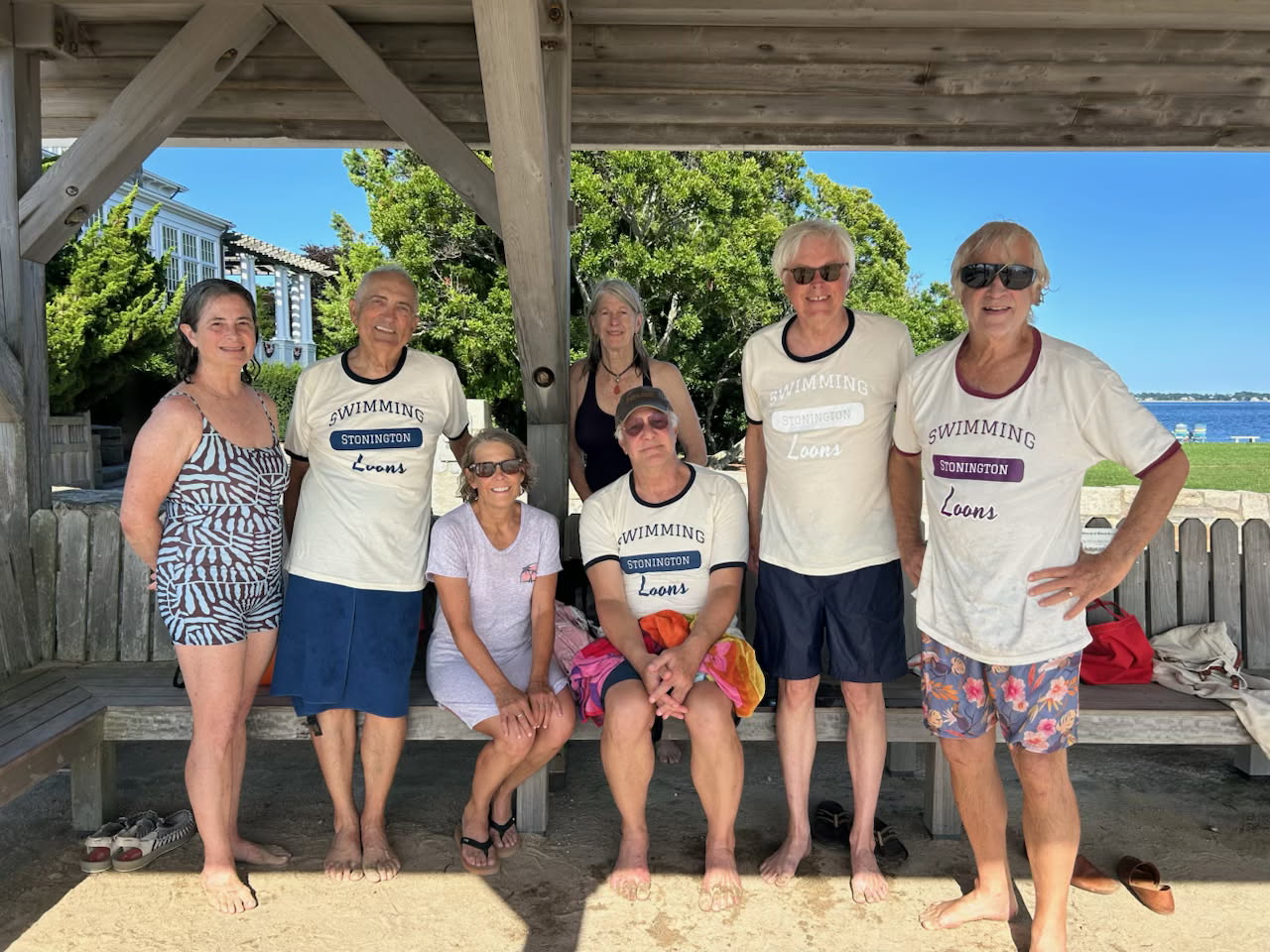
That’s all for now. I will leave you with a picture of me and some fellow “Loons,” the team name for my swimming group. We are not at all competitive, but we enjoy being Loons together.
I have been thinking about Irish popular music this week. It has been difficult to think about much else. On Wednesday, we learned that Glen Hansard, who began as a teenage busker in Dublin and went on to star in the hit movie Once and to earn an Oscar for the song “Falling Slowly,” co-written with Markéta Irglová, his co-star in that film and briefly his romantic partner, had died in a motorcycle accident. Once was transformed into a Broadway musical that won eight Tony Awards, a Drama Desk Award, and a Grammy Award. For anyone who knows his music or anything about him, Hansard’s sudden death at fifty-six years old is not easy to absorb. He is the third in a string of wonderful Irish musicians who have left us too soon.
There is a cliché: You don’t know what you’ve got till it’s gone. I associate it with Joni Mitchell’s environmentalist-themed song, “Big Yellow Taxi,” but like all clichés it is ubiquitous. I’ve learned you can feel a sense of loss for something you never possessed in the first place. In particular, you can miss a musician who was alive at a time when you might have enjoyed them but you never knew them until after they died. This happened to me most dramatically when Dolores O’Riordan, the lead singer of the Irish rock group, the Cranberries, died in 2018. At the time, I’d never heard of the Cranberries. They were a famous band that filled arenas in the 90s, but they just never came up on my radar. When I heard the testimonials for O’Riordan, I began to listen to her music and soon discovered what I had lost without knowing it. The Cranberries had a long string of immense hits, including “Dreams,” “Linger,” and “Ode to My Family,” but it is the raging anti-war anthem “Zombie” that will stick with me forever. Inspired by the Warrington, England IRA bombings that killed two children, the song is a screaming plea for an end to the violence of The Troubles. This 1999 live performance in Paris is perhaps the best way to experience the song.
O’Riordan was from County Limerick, and her voice retained a strong Irish flavor, often lilting, yodeling, and gliding in the manner of Gaelic unaccompanied singing. She retained her Irish accent in song: “It’s the same old t’ing since 1916.” Delores O’Riordan was an immensely talented singer and songwriter, and despite not having known her music when she was alive, I miss her sorely now.
The second sad loss in this trio was Sinead O’Connor in 2023. Another quintessentially Irish singer, who frequently sang a cappella with incredible force, notably during an appearance on Saturday Night Live in 1992, singing a version of the Bob Marley song “War,” at the end of which she ripped up a picture of Pope John Paul II in protest of child abuse. O’Connor received widespread criticism for this act, was booed throughout an appearance at Madison Square Garden two weeks later, and for a time, became something of a musical pariah. In subsequent years, as revelations about sexual abuse of children in the Catholic Church came to light, O’Connor’s act was seen as courageous rather than deplorable. In later years, O’Connor suffered the death of a child and a variety of personal and mental health problems, about which she spoke openly. She lived a troubled life, but I remember her as a strong woman standing alone on stage who sang with soaring power and often said things that others were afraid to say. She will be most remembered for her cover of Prince’s song “Nothing Compares 2 U,” which became a worldwide hit. In much of the official music video (see below), her pale, characteristically shaved head fills the screen on a black background as she stares directly at the viewer. It is still a stunning performance.
Now, Glen Hansard. Thanks to friends who introduced me to contemporary Irish music, even before Once, I became a fan of Lisa Hannigan, Gavin Glass, Paul Noonan (Bell X1 and Printer Clips), and Glen Hansard. After the success of the film, Hansard and Irglová formed a group, The Swell Season, and several years ago, I got a chance to see them at Lupo’s in Providence, Rhode Island. It was a wonderful evening, and in live performance you were able to experience Hansard’s deep love of Ireland and its culture. He would often end his concerts with a rousing version of “The Auld Triangle,” a song that Hansard attributed to the Irish playwright Brendan Behan, who included it in his play “The Quare Fellow.” The triangle in question was used to wake prisoners and signal various activities in Mountjoy Prison, Dublin, where Brendan Behan had once been held. In the play, the song is sung by a prisoner in his cell. The best video I’ve found of Hansard and friends singing “The Auld Triangle” comes from a 2014 Lollapalooza concert. As you will see, by the end of the song, he typically got the entire audience to sing the chorus:
The auld triangle
Went jingle jangle
Along the banks of the Royal Canal
To me, the image of a prisoner in his cell singing this song is a perfect expression of Irish melancholy mixed with joy. The song is born of a country that has faced enormous adversity and managed to produce some of the most enduring music and literature of the western world. I get choked up whenever I hear it,
Perhaps because he started out poor, singing on the streets for spare change, Glen Hansard supported a number of charities aimed at the poor and homeless. Each Christmas Eve in the fashionable shopping area of Grafton Street in Dublin, he organized a benefit busk for those who were homeless or in danger of being so. It grew to be an enormous event, and many famous singers, including Bono, Sinead O’Connor, and Lisa Hannigan would participate.
Glen Hansard will forever be remembered as the Dublin street singer raising his hopeful voice.
As for me, I may have more to report soon, but for now, my most recent article in Skeptical Inquirer is “A Visit to the Center of the Spiritualist World.” While in Buffalo, New York for the 2026 CSICon conference in June, I made a side trip to Lily Dale, New York, the most active spiritualist community in the United States. The visit was quite interesting, and I would love to go back.
After a cold winter and cool spring, Memorial Day weekend and the unofficial start of summer are suddenly upon us here in southern New England. I have just a few items to share.
My latest column for Skeptical Inquirer, “Under Attack from the Armies of Autism Pseudoscience,” reports on the recent bullying tactics used against University of Pennsylvania historian of medicine, Amy S. F. Lutz, who is the mother of a young man with profound autism. Lutz’s sin was writing an opinion piece in the New York Times criticizing the attention given to unfounded communication techniques, such as facilitated communication and spelling to communicate, and the relative lack of attention to the legitimate needs of people like her son.
Next week, I will be traveling to California State University, Fresno, to speak at LiliCon 2026, the annual conference of the Lilienfeld Alliance, a group of college professors who teach skepticism and critical thinking. I will give the opening address on Tuesday, May 26, entitled “How to Change Beliefs by Not Changing Them,” but the full schedule of events across the three days of the conference features many great speakers, including Stephen Hupp, editor of Skeptical Inquirer magazine, David Dunning of Dunning-Kruger Effect fame, and Elizabeth Loftus, arguably the world’s foremost memory expert. It should be great.
Finally, during the weekend of June 11-14, I will be speaking at the second “Con” of the season,
CSICon 2026 in Buffalo, New York. This is a very special conference because it will be a celebration of the 50th anniversary of the Committee for Skeptical Inquiry, publisher of Skeptical Inquirer magazine and your correspondent’s “Behavior & Belief” column. Among the speakers on the roster are Bill Nye, the Science Guy, Mary Roach, best-selling author of Stiff and other popular science books, pandemic hero, Dr. Peter Hotez, environmentalist Michael Mann, and mentalist, Banachek. By coincidence, my talk, “Welcome to the Burned-Over District!” is again the first of the regular conference schedule. I will be talking about the history of western New York State and the many unusual systems of belief that have cropped up there. I’m looking forward to this “Con,” too.
That’s it for now. I will leave you with a peaceful picture I took at the Stonington Fishers Dock last night. We all need a little peacefulness.
Dear Faithful Reader, it is spring here in New England, but the season has yet to kick the doors open. The buds are on the trees, and the daffodils are in full glory. But I look forward to the end of sweater weather. Perhaps soon.
I have been busy since my last missive. Most recently, I wrote about the scandal surrounding Woody Brown’s bestselling book Upward Bound in my April column for Skeptical Inquirer. The book was written using the Rapid Prompting Method, a discredited form of communication that strongly suggests his mother was the real author. That hypothesis is supported by the video of Brown’s April 1 appearance on the NBC Today Show, which shows that his pointing at a letter board bears no relation to the words attributed to him by his mother.
In late March, I wrote a short piece about an unusual amicus brief in a death row case. The famous magicians, Penn & Teller, filed a brief in support of Charles Don Flores, who was convicted of a 1998 murder solely on evidence obtained using hypnosis. Due to the unreliability of the evidence it produces, hypnosis in police investigations is now illegal in many states—including in Texas, where Flores was convicted—but because his trial took place before the law was changed, he remains on death row. Penn & Teller called the evidence against Flores “junk science of the worst sort.”
Finally, at the beginning of March, I wrote a piece called “Yes, Cognitive Dissonance Is Still Actually a Thing” in response to revelations that the famous book When Prophecy Fails by Leon Festinger, Henry Riecken, and Stanley Schachter may have been based on false reporting and manipulation of the participants in a UFO cult. This and other factors prompted a New Yorker magazine reporter to question whether the concept of cognitive dissonance was still “actually a thing.” I reviewed the current literature and concluded that it is too soon to discard cognitive dissonance as a psychological concept. It still happens, and the theory is still scientifically useful.
That’s all for now. In the hope that spring will bring warmer temperatures and happier times, I will leave you with “a host of golden daffodils” sent to me by a friend. See you next time.
I write you from frozen February in New England. I hope you are cozy and warm wherever you are.
In my latest column for Skeptical Inquirer, “Will Narrative Defeat Reason?” I discuss the appeal of heroic stories and argue that democracy does not provide for participation in a heroic narrative. Almost all of human existence is a long history of emperors and kings, but self-government has had a much shorter and more fragile history.
I also wrote a short news item for Skeptical Inquirer, “RFK Jr. Puts Facilitated Communication Users on the HHS Autism Panel,” about the Secretary of Health and Human Services’ latest anti-science move. RFK Jr. recently announced the appointment of 19 new members of the Interagency Autism Coordinating Committee (IACC), and two of them are non-speaking young adults with severe autism who have been subjected to a version of the discredited communication technique, facilitated communication. We probably shouldn’t be surprised. RFK Jr.’s appetite for pseudoscience appears insatiable.
Finally, in late May, I will be in Fresno, California, to speak at LiliCon, which is the annual conference of the Lilienfeld Alliance, a group of college professors who teach critical thinking. This is a great organization named after one of my professional role models, Scott Lilienfeld. My talk is entitled, “Changing Beliefs by Not Changing Beliefs.” If you teach critical thinking and are free May 26-28, consider coming to the conference. There are some great speakers on tap.
Happy December. This will undoubtedly be my last message of the year.
My October column for Skeptical Inquirer, “‘Have You Seen My Wallet?’ Civic Honesty around the Globe,” was a bit of good news. According to a remarkably ambitious field experiment conducted in forty countries, people are more altruistic than you might think. The authors of the study turned in over 17,000 “lost” wallets at reception desks at museums, public offices, or other institutions. The wallets contained either no money at all or the equivalent of US$13.45, and the “owner’s” email address was clearly displayed. The crucial measure was contacting the owner (actually, the experimenters) or not. Contrary to standard economic theory, people virtually everywhere were MORE likely to contact someone they thought was the owner if the wallet contained money than if it didn’t. Not what the experimenters expected, but good news nonetheless. One country took issue with their results in the study, but I will leave that episode for you to discover in the article.
A modern ECT machine.
My latest “Behavior & Belief” column, “Profound Autism and Electroconvulsive Therapy: A Neglected Resource,” is on the use of ECT with children whose severe behavior has not responded to other therapies. It features the story of Amy S. F. Lutz and her son Jonah, who greatly benefited from ECT. In Jonah’s case, the improvement in his behavior after ECT meant the difference between being institutionalized and continuing to live at home. Unfortunately, ECT’s scary reputation, fostered by films such as One Flew Over the Cuckoo’s Nest, has led to severe restrictions in some states, which means that many families whose children might benefit from ECT have difficulty accessing it.
That’s it for 2025. I hope you have a wonderful holiday season, and may 2026 be a better year for us all.
Welcome to autumn. The calendar says that summer is over, but here in New England, we are enjoying a warm spell. The swimming has been some of the best of the year.
My September “Behavior & Belief” column for Skeptical Inquirer is “Improving Psychological Science Through Adversarial Collaboration.” It is not uncommon for researchers to study the same topic and come to completely different conclusions. Rather than looking for a way to bridge these gaps, researchers often dig in and design studies that support their pet theories. Thankfully, a new technique, adversarial collaboration, has the potential to move researchers away from their opposing positions and closer to the truth. This movement is still quite new, but it is a very positive development.
And now for something a little different. Last week, I came across a photo that sent me on a sentimental journey about someone whobriefly passed through my life over fifty years ago. I memorialized that interlude in a short essay on Medium called “One That Got Away.”
If you want to go down a similar sentimental path, I recommend this version of the Tom Waits song “Martha” by Lisa Hannigan. It was performed live in Dublin on New Year’s Eve, 2012. The pianist is Cormac Curran. It is a wonderful song, and Hannigan’s version is—in my opinion—even better than the original. It makes me cry every time.
These few news items mark the end of the Summer of 2025.
My July column for Skeptical Inquirer was a look back at two related bits of irrationality: the Hot Hand and the Gambler’s Fallacy, both of which are based on the mistaken belief that independent events are not independent. Recent research suggests that, with respect to the Hot Hand—the belief that certain athletes get “hot” and can’t seem to miss—the athletes were right all along and the scientists were wrong.
Although the date slipped past without my noticing it, back in December of 2024, I clocked ten years writing for Skeptical Inquirer magazine. Once I noticed the anniversary, I wrote a column to memorialize the event. Writing for SI has been one of the great joys of my career. As long as I am able, I hope to keep writing the “Behavior & Belief” column.
I am writing this on August 24, undeniably the last few days of summer. Labor Day weekend is a week away. For the last several days, I’ve been singing John Prine’s song, Summer’s End. I wanted to include a YouTube video of the song in this message, and I watched several versions before making a choice. As beautiful as the song is, it is quite sad, and I cannot watch these videos without crying. The “come on home” chorus brings out the emotions every time. Finally, I chose this arrangement by Irish singers Paul Noonan, Lisa Hannigan, and Gemma Hayes. They divide the parts nicely and sing in wonderful harmony.
S
I am particularly fond of several lines of the song, for example, this couplet:
Well, you never know how far from home you’re feelin’
Until you’ve watched the shadows cross the ceilin’
And this final verse:
The moon and stars hang out in bars just talkin’
I still love that picture of us walkin’
Just like that ol’ house we thought was haunted
Summer’s end came faster than we wanted
I hope you squeeze as much joy as possible out of these last days of summer.
It is the midsummer of our discontent, and I have just a few items to report.
Ky Dickens
William James
In my June column for Skeptical Inquirer, “Ky Dickens, William James, and the Four Possibilities,” I revealed a surprising parallel between the dilemmas faced by the host and director of The Telepathy Tapes podcast and the early American psychologist. There is at least one important difference between the two: for Dickens, telepathy is a huge plus; for James, it was a major minus.
On June 26, I had the privilege of guest-hosting an episode of Skeptical Inquirer Presents in which the Cambridge University psychologist Sander van der Linden talked about how to combat misinformation. Van der Linden is one of the top researchers in this field and has worked with both governments and social media companies to improve our information environment. He is the author of a terrific book, Foolproof: Why Misinformation Infects Our Minds and How to Build Immunity. Although I’m on record as not being sold on the immunity metaphor, it is undeniable that van der Linden is doing excellent and important work on a topic that couldn’t be more urgent. You can watch his presentation here.
That’s it for now. Try to stay cool. My old folks’ summer swimming group, The Stonington Loons, is fully engaged. I will leave you with a photo of some of us plying our way through Stonington (CT) Harbor. One of those heads is mine, but it is up to you to figure out which one.

 showing that readers actually prefer fiction and poetry written by AI chatbots over works written by human beings—even by some of the best writers in the English language. If readers are told a work is written by AI, they report liking it less than works they are told are written by a chatbot. But it appears that, among other things, the robots have learned how to enchant us with their words.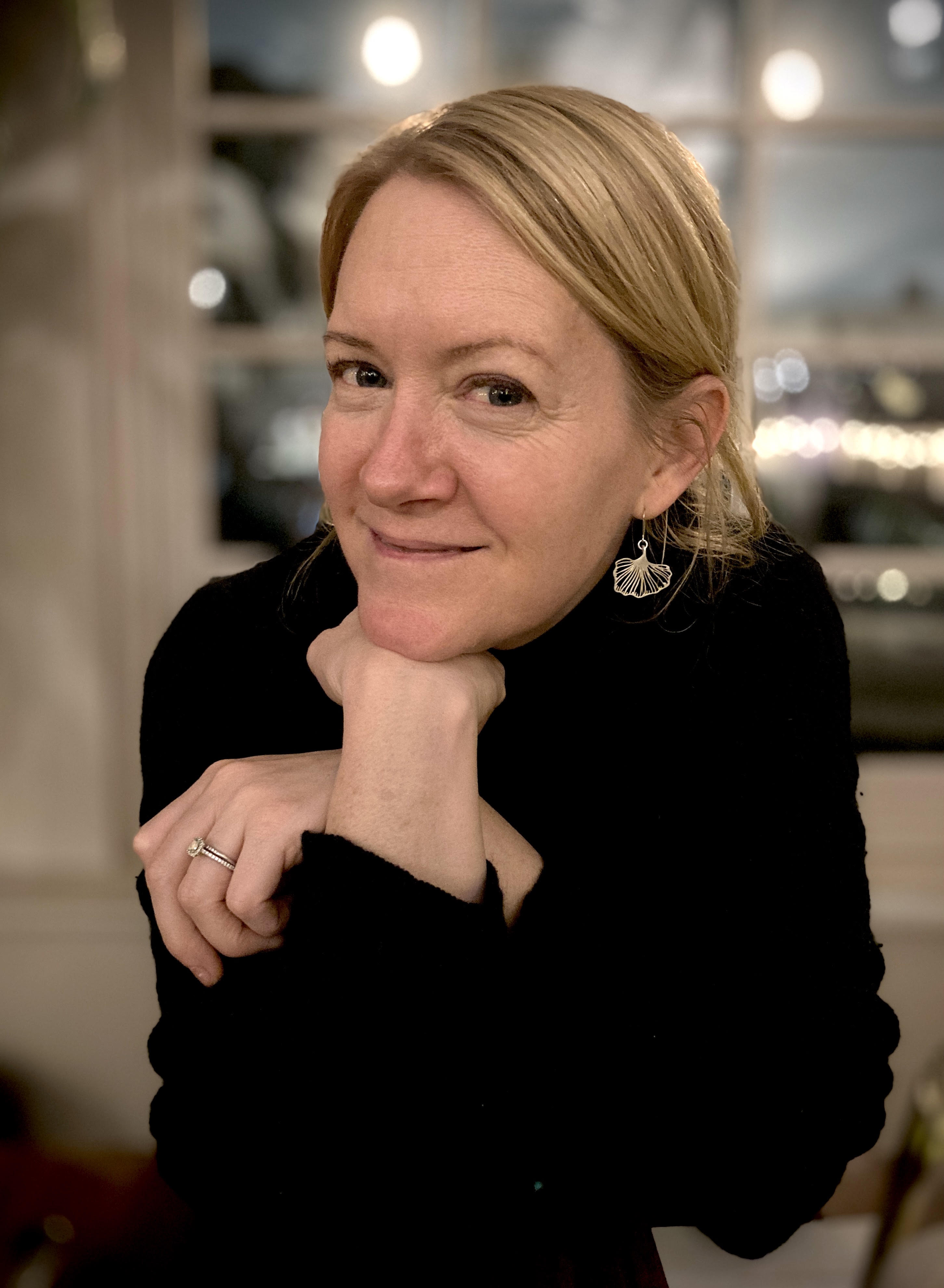






 Finally, I wrote an unusual piece for me—an art review of the exhibit “